Basketball Arcade Guides
Basketball Arcade Games: A Beginner’s Starting Guide
Which game to open first, what to expect in twenty minutes, and the three things that confuse every new player.
If you have never played a browser basketball game, the genre can look more intimidating than it is. This is a twenty-minute orientation: what to open first, what the controls do, and what a normal first session looks like.
You do not need to know basketball
Worth saying up front. These are timing and judgement games that happen to use a hoop. The only real-world concept that carries across is that shots from further out are worth more points.
Everything else — arcs, meters, combos — is game vocabulary, and it is explained in the glossary if you want it.
Start here: Basketball Precision Shot
Of the six games on the site, Basketball Precision Shot is the right first one, for two reasons.
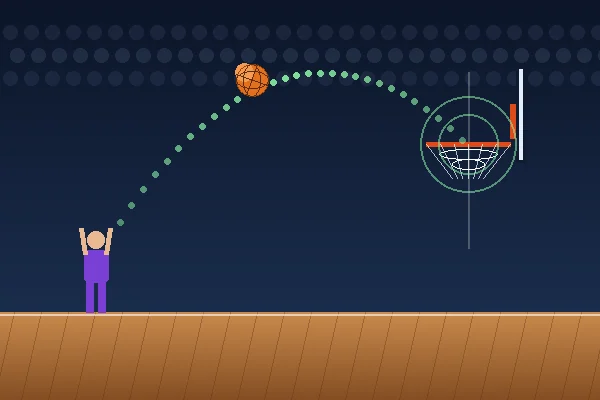
It shows you the answer. The dotted line on screen is the exact path the ball will take. You are not guessing at physics; you can see where the shot goes before you take it.
There is no clock. You have five misses, and until you use them, time is free. That removes the pressure that makes the other games harder to learn in.
Open it, press Space or tap the court, and watch the sweeping line for a few seconds before you do anything. Release when it points at the hoop. That is the whole game.
Then: Basketball Hoop Rush
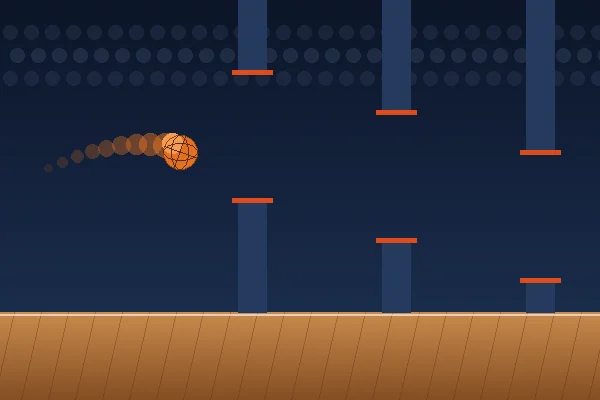
Basketball Hoop Rush is the second one to try, because it uses a completely different part of your brain — continuous rhythm rather than discrete aiming — and it takes about ten seconds to understand.
The ball falls. Each tap bounces it up. Go through the hoops. That is it.
It is also the most phone-friendly game here, if that is where you are playing.
Then whichever appeals
After those two, the rest split by what you enjoyed:
- Liked aiming? Basketball Shooting Challenge
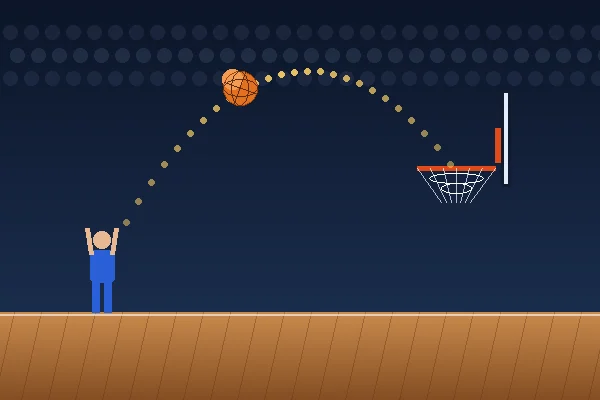
gives you full control of angle and power.
- Liked rhythm? Dunk Challenge is pure timing with a run-speed
twist.
- Want pressure? Basketball Time Attack or the
3-Point Challenge add a sixty-second clock.
The controls, in one paragraph
Space does the main thing in every game — start, shoot, jump, bounce, restart. Tapping the court does the same on a phone. P pauses, R restarts. A few games add arrow keys for extra control, and those are listed on each game page. Full details are in the controls reference.
Three things that confuse everyone at first
1. The hoop moves. In most games here, the rim relocates after each shot, or drifts while you aim. This is deliberate — it stops one memorised input from working forever. Read the current position before you aim, every time.
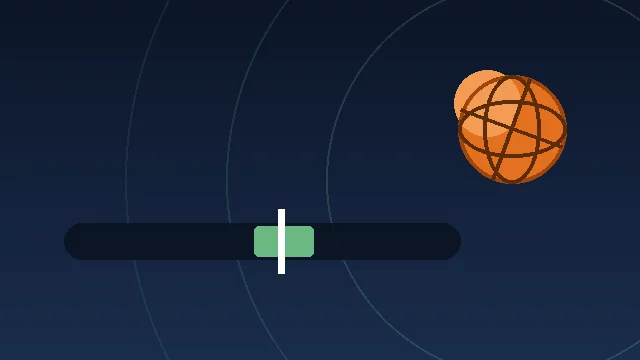
2. The meter is not the same every shot. In games with a power meter, the correct release point depends on the current distance. There is no single right answer to learn.
3. Missing is normal. A first session somewhere around 30 per cent on a shooting game is completely ordinary. The number moves quickly once you stop over-powering, which almost everyone does at first.
What a normal first twenty minutes looks like
- Minutes 0–3. Precision Shot. Watch the preview line. Shoot when it points at the hoop. Expect
to lose five lives fairly quickly.
- Minutes 3–6. Precision Shot again, this time waiting for the hoop to pause at the top or
bottom of its travel. Your score will roughly double. This is the moment the genre clicks for most people.
- Minutes 6–10. Hoop Rush. Learn the rhythm of small taps.
- Minutes 10–15. One of the timed games. Do not worry about the score.
- Minutes 15–20. Go back to whichever you enjoyed most and play it properly.
Reading the game pages
Each game page has a section that lists exactly what each action scores. It is worth two minutes before your second round, because it changes how you play — knowing that a combo multiplier caps at x5 makes protecting a streak feel very different from guessing that it might matter.
What is saved, and where
Your best score for each game is stored in your own browser, on the device you played on. No account, no sign-up, nothing sent anywhere. If you clear your browsing data it goes; if you play on a different device it starts fresh. The privacy policy has the full detail.
Five rules that cover most of it
If you remember nothing else:
1. Look before you aim. The hoop moves in most games here. Aiming from memory of the last shot is the single most common source of a wild miss.
2. You are probably over-powering. It is the near-universal beginner error. If shots are sailing past the hoop, ease off more than feels right.
3. Protect a streak. Most games multiply your score by a combo. Once it is high, the safe shot is worth more than the impressive one.
4. Waiting is free when there is no clock. In Basketball Precision Shot and Dunk Challenge, nothing is charging you for patience. Most beginners play them as if something were.
5. Read the scoring section on the game page. Two minutes, and it changes how you play more than an hour of practice will.
What to do when you get stuck
Everyone plateaus in the first week. Here is how to work out which kind of stuck you are.
"I can't make shots." Accuracy problem. Go to how to improve your arcade shooting accuracy and run the miss-direction diagnostic — it takes one round and tells you which single adjustment to make.
"I make shots but my score is low." Pacing problem, not accuracy. You are probably breaking combos. How to get higher scores has the arithmetic.
"I was fine and now I'm worse." Two possibilities. Either the game got harder — most of them escalate when you succeed — or you are tired, which shows up as releasing late before it shows up as anything else. Both are normal and neither is a plateau.
"It feels random." Worth checking carefully, because it should not. None of the games here uses hidden randomness; a correctly placed shot always goes in. If outcomes genuinely seem inconsistent for identical inputs, that is either dropped frames (close some tabs, turn off battery saver) or a bug worth reporting.
A week-one plan
Fifteen minutes a day, five days. It is more effective than the same time spread randomly.
Day 1 — Precision Shot. Play normally. Then play again, releasing only when the hoop pauses at the top or bottom of its travel. Compare the scores. This is the single best lesson available on the site.
Day 2 — Hoop Rush. Learn the rhythm of small taps. Aim for the centre line of every hoop while the speed is still low.
Day 3 — Shooting Challenge. Fix your release angle somewhere steep and vary only power. Watch where each miss lands.
Day 4 — 3-Point Challenge. Five spots, five distances. Use the ghost marker. Expect a low percentage; that is normal on a fixed-angle game.
Day 5 — whichever you enjoyed most, played properly, with a three-round average written down.
That last number is your baseline. Everything after week one is measured against it rather than against how a session felt.
Things that are not your fault
Worth saying, because beginners often assume the opposite.
The hoop moving. Deliberate design. It exists so that memorising one input never works.
Difficulty rising after a good run. Also deliberate, and it is tied to your success rather than to a timer — which means it only gets harder when you have earned it.
A low first-session percentage. Thirty to forty-five per cent on a fixed-angle shooting game is completely ordinary, and it improves fast.
Finding a timed game stressful. That is what a clock is for. If it is not enjoyable, the life-limited games have all the challenge and none of the hurry.
Where to go next
— the most useful next read once you have played a few rounds.
- Basketball arcade terminology — if any vocabulary
on the game pages is unfamiliar.
- The full game list — filterable by type, difficulty and control scheme.
Frequently asked questions
Which basketball arcade game should I play first?
Basketball Precision Shot. It draws the ball’s full flight path before you release, so you can see what a correct shot looks like instead of guessing. It also has no clock, which removes time pressure from your first attempts.
Do I need to know anything about basketball?
No. These are timing and judgement games with a basketball theme. The only real-world concept that carries over is that shots from further away are worth more.
Are the games free?
Yes — free to play, no account, no download, nothing to install. They run directly in your browser on desktop or mobile.
How long does a game take?
Most rounds are about a minute. The life-limited games last as long as you survive, which early on is usually under two minutes.